
by Cassandra Balentine
Premium finishing adds value to digitally printed output. Print enhancement and embellishment tools support digital production and the creation of luxury packaging.
“Luxury packaging is defined by the experience it creates,” states Neil Drever, product consultant, Skandacor. “It’s not just about protecting the product but about presentation, perception, and emotional impact.”
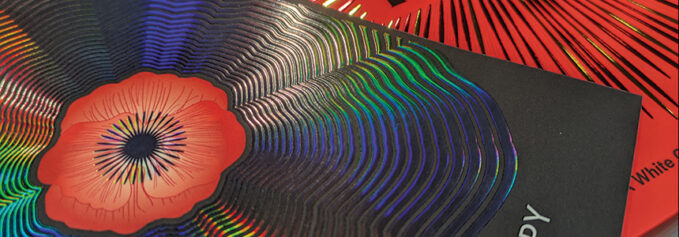
Above: Designed for short runs and fast turnaround, the Harris & Bruno ZRX Digital Embellishment Press delivers excels on uncoated substrates and supports effects like flood coating, raised UV spot coating, and foil.
This type of high-end packaging is characterized by exceptional quality, distinctive design, and the use of premium materials and finishes that create a memorable unboxing experience. “It communicates exclusivity, craftsmanship, and brand prestige, often incorporating embellishments to elevate the perceived value of the product,” shares Mark Geeves, director of sales and marketing, Color-Logic.
Combining visual impact with a tactile experience signals quality before the product is even revealed. “The most successful examples look premium—and more importantly, feel premium—through texture and dimensional effects. It’s about delivering an experience that enhances brand perception and reinforces value, before the product is even unboxed,” exclaims Ryan Moskun, marketing manager, Harris & Bruno International.
When done properly, luxury packaging should elevate a product through superior sensory and emotional impact. “It communicates quality and exclusivity through refined materials, precise finishing, and thoughtful design. True luxury packaging enhances the first and second moments of truth—capturing attention at first touch and reinforcing brand value throughout the product experience,” say Ed Wiegand, CEO, and Michael Ferrari, global marketing director, JetFX.
Drever points out that high-end packaging uses premium materials and sophisticated finishes such as soft-touch laminates or foiled logos to signal quality and exclusivity. “It should create a memorable unboxing moment that connects the customer to the brand before they even see the product.”
Luxury packaging must engage the consumer’s sense of touch to increase the perceived value of the product inside, adds Dragan Nikolic, partnerships and enablement lead, Nobelus. “No other sense influences a person’s emotions and decision-making process more than touch. When we interact with packaging that has a haptic effect, we connect with it more strongly and hold it longer, making us far more likely to buy it.”
Digital print expands the potential for luxurious, high-end packaging. “Today, luxury is also about responsiveness and the ability to tailor packaging to seasonal campaigns, microsegments, and even individuals. That level of agility is quickly becoming part of what consumers associate with a premium brand experience,” notes Matt Raab, director, global portfolio marketing, Xerox Corporation.
Premium Finishes
Several effects are popular on digitally printed luxury packaging, including foiling and sleeking, metallic embellishments, spot UV coating, embossing and debossing, soft touch and specialty laminations, specialty inks, white and specialty underlays, and die and laser cutting.
Raab sees strong demand for visually striking and tactile enhancements that help brands differentiate without committing to long, static offset runs.
Specialty inks like metallic, white, or clear inks create standout visual effects, especially when paired with varnish or foil.
With spot UV coating, print providers apply gloss varnish to select areas to create visual and tactile contrast, making logos or patterns stand out.
While metallic foils in gold, silver, or holographic tones add a premium look. “Digital foil transfer methods allow short runs without the need for dies,” comments Drever.
Soft-touch and specialty laminations add a textured surface that feels luxurious and works beautifully with spot UV or foil overlays.
“Modern lamination films are available in a range of premium matte finishes, with some being smooth and others tactile. Among these finishes, many types are compatible with conventional or inkjet spot UV, hot foiling, and cold foiling. It is very hard for consumers to resist the appeal of embellishments layered over a tactile matte film,” says Nikolic.
Popular premium finishes include using white and CMYK inks on metallic stocks, silver, and CMYK inks on paper, cold foil, or sleeking, and with UV spot or flood coatings. Software like Color-Logic’s system is compatible with all of these effects, and its Design Suite for Adobe Creative Cloud enables printers to provide their brands the ability to add vibrant, eye-catching metallic colors, and special effects that enhance brand storytelling and product allure, says Geeves.
“These finishes enhance both visual and tactile impact—helping brands create premium, multi-sensory packaging. What’s driving adoption now is the ability to apply these finishes inline, without tooling, and even customize them per SKU or region. The trend is moving toward high-resolution, variable embellishment that makes each package unique,” say Wiegand and Ferrari.
“Today’s packaging designers gravitate toward digital embellishments that deliver high sensory value with low setup requirements,” notes Moskun.
He feels the most popular include tactile raised spot coatings, metallic foil—including matte foil and foil-on-foil, variable-height textures for dimension, digital embellishments on uncoated media, soft touch and specialty coatings that add perceived material richness, and matte spot coating.
“With digital embellishment, these effects are applied instantly without dies or long lead times, making them ideal for prototyping, seasonal packaging, and premium short runs. Additionally, the eco-friendly benefits of not having to create the dies or use harsh chemicals are a huge draw to consumers and brands looking for more ecological packaging,” adds Moskun.
Further, die and laser cutting techniques allow for creative cutouts and shapes add dimension and distinctiveness to packaging designs.
“These enhancements make packaging both visually and physically engaging, turning a printed surface into a brand experience,” says Drever.
Making an Impact
Short-run folding cartons, ecommerce and subscription packaging, as well as labels and branded collateral that support package segments are adopting luxury packaging effects, says Raab.
When it comes to short-run folding carton production, brands rely on embellishment to signal quality, especially in beauty, wellness, and premium brand categories. “Short runs let them test limited editions, seasonal kits, and influencer mailers at lower risk,” offers Raab.
Ecommerce encourages more products to ship directly to consumers, unboxing is the new storefront. Raab points out that embellishments help replicate that “in-store moment,” making the brand feel thoughtful and high end.
High-impact metallics or clear spot effects help unify the brand story across touchpoints—boxes, inserts, and point of sale materials. “Digital embellishment shines here because it lets brands refresh designs quickly, localize campaigns, and personalize packaging, all without excess inventory and the costs and waste often associated with inventory,” comments Raab.
In Geeves’ experience, most embellishment is occurring on cartons, labels, and sleeves. “These areas are prime real estate for visual impact making them ideal for showcasing intricate designs, metallic colors, and effects that draw consumer attention and differentiate premium products on the shelf. We are also seeing a growing trend with accent pieces like tags on the bottle or marketing pieces inside the box.”
Growth in embellishment is happening in beauty and cosmetics, wine and spirits, and premium retail and gift packaging. “These markets depend heavily on visual appeal and brand differentiation,” shares Drever.
For example, cosmetics boxes often feature soft-touch coatings with gold foil, while wine labels use embossed crests and foil borders to reflect tradition and quality. Drever adds that premium retail packaging—from jewelry to electronics—use embellishments to elevate the unboxing experience.
Even niche sectors like gourmet foods are adopting tactile coatings and foils to attract attention and convey exclusivity. “In every case, embellishment is used to create impact and emotional connection, even before the consumer takes it off the shelf,” comments Drever.
Nikolic adds collectible cards, nutraceuticals, cannabis, personal care, specialty foods and confectionary, as well as craft beers and spirits as key market recipients for embellishment.
Short-run premium packaging is a growth area. “Brands are moving away from mass-produced static designs toward shorter runs that allow for frequent updates, targeted campaigns, and limited collector editions. Digital embellishment supports this shift by eliminating the need for tooling or dies, giving brands the freedom to prototype and test various designs as well as bring concepts to market faster,” explains Moskun.
Personalization and versioning is also trending, where packaging is tailored by region, retailer, or customer. “Campaign-based packaging, influencer collaborations, and product unboxings on social media increasingly demand fast turnaround with premium finishing. With digital embellishment, brands create multiple design variations within a single run, combining tactile effects like raised UV or foil with variable data to produce high-end, customized packaging at scale,” shares Moskun.
Packaging is experiencing rapid growth in the use of embellishments across labels and flexible and folding carton packaging, extending beyond beauty into nutraceuticals, wine and spirits, and home fragrance, confirm Wiegand and Ferrari. “Brands adopt digital embellishment to differentiate and justify premium pricing—especially in short- to mid-volume runs where converters add high-value effects efficiently. As digital embellishment costs decline, adoption is accelerating across new verticals, making luxury-quality packaging more accessible and scalable.”
Seeing the Return
Digital embellishment offers a strong return on investment (ROI) for both printers and brands.
“Customers are willing to pay more for premium packaging, often allowing brands to charge 15 to 30 percent higher prices for the same product. For print providers, these jobs deliver better margins because the cost of finishing is small compared to the perceived value it adds,” offers Drever.
Digital embellishment helps teams avoid thousands of dollars in die costs while improving the ability to prototype, test, and adapt. “It enables A/B testing, design variations, and cost-effective upgrades that would otherwise be impractical using traditional embellishment methods,” states Moskun.
Embellishments also increase engagement. Tactile finishes invite customers to touch and interact with the packaging, which boosts purchase intent. “Beautifully finished packaging encourages repeat purchases and often becomes shareable content on social media. That kind of organic promotion strengthens brand image and amplifies the return far beyond the initial sale. For many print providers, the ability to transform an ordinary print into a premium, high-margin product means the equipment investment pays back quickly,” suggests Drever.
Moskun adds that when packaging looks and feels elevated, consumers assign higher worth to the product before even opening it. “It also significantly reduces time to market. Because digital embellishment does not require dies or tooling, designers can iterate quickly and move from concept to production without delay. This speed is especially impactful in competitive markets where rapid response to trends or product launches is critical.”
Digital embellishments often result in a significant ROI by increasing perceived value, enhancing brand recognition, and driving consumer engagement, admits Geeves. “The ability to produce eye-catching, high-end finishes cost effectively at the design stage on digital presses allows brands to create limited editions, localized or personalized versions, test new designs rapidly, and respond to market trends—all contributing to increased sales and brand loyalty. Color-Logic promotes return on response—or ROR—as well as ROI. The key for any brand is to provide an experience that makes such an impression they come back for more,” he adds.
Embellishments and haptic finishes are more effective in signaling quality to consumers than written descriptions, which immediately demonstrates the value of premium packaging. “In competitive consumer markets, premium embellishments and tactile packaging outsell plain finishes ten-fold. If a brand wants to sell more than the competition, they should invest in the packaging experience that leads to greater brand loyalty,” says Nikolic.
Another major advantage is short-run viability. “Brands can economically produce premium packaging in smaller quantities for seasonal releases, luxury sampling, customization, or influencer campaigns. This reduces risk and aligns with the growing demand for personalization and targeted engagement,” shares Moskun.
Raab indicates that print providers tend to see ROI show up in three clear ways—higher margins, reduced waste and inventory, and faster time to market and greater agility.
To achieve higher margins, he explains that embellished packaging commands premium pricing that is often 30 to 60 percent higher because brands see it directly influencing perceived value and sales lift.
For reduced waste, Raab points out that digital “white paper-in” workflows eliminate many analog processes and minimum order quantities. “Providers only print what’s needed, when it’s needed, improving cash flow and reducing storage and associated costs.”
As previously noted, more flexibility allows brands to launch micro-runs, A/B test visual treatments, and personalize without setup delays. That agility drives repeat orders and positions the provider as a strategic partner.
“Xerox clients using beyond-CMYK technologies consistently report that embellishment has become a differentiator that attracts new clients, strengthens loyalty, and expands into adjacent applications like direct mail, labels, and promotional kits,” concludes Raab.
Packing in the Luxury
Embellishment elevates the visual appeal of luxury packaging and is now used strategically to support personalization and market reaction speed.
“Digital technologies empower brands to be continuously agile, refine their designs, create exclusivity with limited runs, and build emotional connections through packaging that looks and feels elevated,” concludes Moskun.
Jan2026, DPS Magazine